Friday, June 27, 2008

Happiness for Sale: The Effect of Money on Happiness


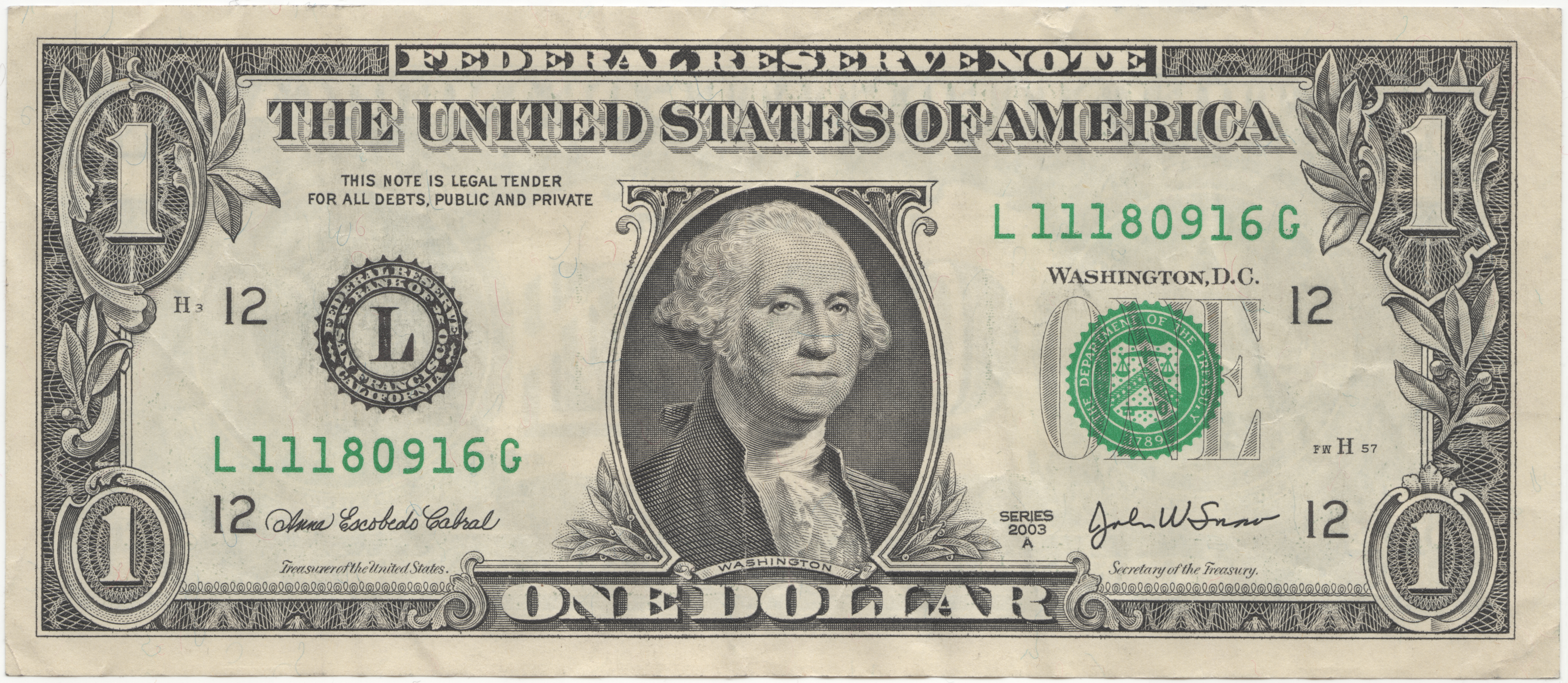
The following is a "Cliff Notes" version of our paper, to be published in next month's Journal of Economic and Sociological Theory of Advanced Study in Higher Education.


Introduction:

Can money buy happiness? Scholars have long debated the merits of such a proposition. Sipher and Jones (1956) found that the effect of money on happiness was weakly positive. Other studies, such as Dick and Johnson (2004); Willie and Cox (1996), have suggested that money's effect on happiness is spurious, at best.


Theory
:

Since money is a type of currency used for the exchange of goods and services, it is suggested that an excess of money will lead to happiness.


Methods:

For our study, we conducted a series of lab experiments at a major university in the Northeast. The participants were male college students in an undergraduate sociology course. In all, there were 226 students who participated in our study.

Our research design was simple, but effective. We randomly assigned all 226 students into two groups (Group 1 and Group 2)


Group 1
:

For Group 1, we brought 113 students into a room and told the students they would each receive $10,000 for simply signing their name on a sheet of paper. After signing their name, the participant was given $10,000 in cash and oral sex by one of our female graduate students. They were next presented with a happiness scale, The IJSMWISH Scale*** (See *** at the end of this post for scale).


Group 2
:

For Group 2, we brought 113 students into a room and explained our process of random assignment. Further, we told participants in Group 2 that participants in Group 1 received $10,000 each and that participants in Group 2 would receive nothing. We also told participants in Group 2 that participants in Group 1 received oral sex from our female graduate students.

We then administered The IJSMWISH Scale to participants in Group 2.


Results:

There was a much stronger relationship between money and happiness in Group 1 than Group 2. Group 1 participants were more than ten times as likely to report high levels of happiness than participants in Group 2.


Discussion:

The results are reasonable to warrant the posited theoretical explanation. We hypothesized that, ceteris paribus, individuals would be happier after receiving $10,000 than before. We also hypothesized that, ceteris paribus, individuals would report lower levels of happiness after finding they were randomly placed in a group that did not receive $10,000. Our findings appeared to support these hypotheses.


Conclusion:

Our study suggests that money does, indeed, buy happiness.


Appendix:

The I Just Shot My Wad I'm So Happy (IJSMWISH) Scale.

On a scale of 1-5, with 1 being "not at all similar" and 5 being "very similar", how would you compare your happiness right now with your happiness at the climax of orgasm?

Limitations:


We thank numerous colleagues at both conferences and seminar presentations for their invaluable feedback.


One concern was our conceptualization of happiness, which we likened to orgasm. Some thought we were not distinguishing sufficiently between "happiness and pleasure". To us, though, there seems to be reasonable justification for likening happiness to sexual orgasm.


Sexual orgasm, particularly after a long period of "drought", is one of the most intensely pleasurable experiences known to the human species, and thus can be safely assumed to be a "happy event". In fact, many massage parlors we have studied (F & Uck, 2002) refer to "happy finishes", a colloquial term for orgasm.


Another concern consisted of our experiment itself. It was noted that participants in Group 1 received oral sex and participants in Group 2 did not. It might be that oral sex contributes independently of or interactively with receipt of money to produce happiness. Our model did not assess this possibility. However, we thought it important to, nevertheless, include oral sex in the experiments for methodological concerns -- namely, our use of the I Just Shot My Wad I'm So Happy scale.


As noted in the first limitation discussed, "orgasm" may be a poor or incomplete proxy for "happiness"; thus, we thought it important to include a manipulation whereby the participant would be induced to orgasm. This would help establish that happiness and orgasm are, in fact, loading on the same dimension. This was confirmed with the aid of confirmatory factor analysis.

Breast Size and Profit Maximization: A contingency approach


While extant research in the medical field has examined aspects of the female mammary glands (Ridger 1980; Brothers 1998) and research in the field of strategic management has considered profit and profit maximization (Love 1991; Carson 1965), no research has considered the effects of mammary glands on profit. A particularly worthy question may be: What is the effect of breast size on a woman's money-making potential?


Method:


Throughout the paper, we include interviews we conducted with some 200 female prostitutes in motel rooms throughout the southwestern United States. We generally conducted our interviews at night to ensure the prostitutes were more comfortable.


Additionally, since our research question concerns the size of women’s breasts and their money-making potential, we distributed a questionnaire asking the informants their chest sizes. To limit mono-method bias, we also personally verified breast size by asking that informants remove their blouses and (if they were wearing them) brassieres. We then circled their breasts with a tape measurer in the generally accepted manner of measuring chest size (Penney 1923). This minimized the possibility that women were exercising social desirability in questionnaire responses by inflating their breast size.


After verifying breast size, we brought in various male respondents to whom the prostitute informants had alerted us. We kept our identity as researchers hidden to minimize any external bias. We then left the room, and the prostitutes were instructed to remove their clothing, then suggest a price for sexual favors. Sexual favors can include oral sex, “lap” dances, manual stimulation, anal penetration, vaginal penetration, or other sexual acts.


Our aim was to see how the male respondents factored in breast size in their negotiation of price. After an agreement had been reached, the male respondents and female informants completed terms of the deal, then we came in to interview both parties.


The following, potentially important themes emerged. First, many male respondents distinguished between “real” and “fake” breasts. Said “Jim”.


“I mean, F---, some times, you see a chick [woman] and you’re like, d---, she’s got some nice tits [breasts]. And then, you get with her, and you start going there, man, and it ain’t feelin’ right.”


We asked whether it felt better, worse, or the same, and “Jim” said it felt worse. Second, some male respondents said they preferred the female informant leave her top on.


“I don’t need to see no boobs [breasts], man. Just show me some bush [female pubic area].”


Confused, we decided that it was important to further consider why some male respondents were not showing interest in our female informant’s breasts. To get a better “handle” on our data, the authors decided to spend not more than thirty minute sessions analyzing said-female informants’ breasts. The authors took care to squeeze the breasts in various parts, outline the nipples with their hands, and engaged in the process colloquially known as “motorboating.”


We found that, in most cases, the breasts in question were perfectly responsive to our physical manipulations, had an acceptable level of symmetry (.95 on the Breast Scale, Baker 1994), and when we presented photographs of them on our research site to paying respondents, their breasts received an equal number of hits as breasts considered beautiful (e.g. supermodel Heidi Klum’s, Elle McPherson’s, etc). (Note: it was important we charge respondents for access to the site, since we wanted their choices to be invested with more meaning. In other words, paying members would be more likely to take care in choosing which videos to download (Sunk Cost Theory).


Thus, it appears that some men may not be as attracted to women’s breasts as others. For female informants considering breast augmentation, then, it may not be financially rewarding in all scenarios. Hence, our research suggests a contingency approach. “Breast” men may pay more for encounters with women who have augmented breasts, while non-breast-men may not.


Stay tuned for the entire paper, due in a leading journal later this summer.


Best,

Prof F.

Friday, June 20, 2008

Toward a theory of prenatal racism


While research on racism has a long history in the social sciences (Wilson 1978; McCleveland 1946; Mammogram 1963), relatively little attention has been devoted to racist child-birth patterns within America. This phenomenon, what I will forthwith refer to as Prenatal Racism, occurs when two parents of the same race/ethnicity give birth to a child of the same race/ethnicity.


Further, I suggest that as the parents’ fecundity increases, so does the potentially overt discrimination. In other words, if Alex and Sue are Caucasian and have two Caucasian babies, that is suspicious, but incipiently ambiguous. However, if Alex and Sue have five Caucasian babies, then we can reasonably observe a Prenatally Racist pattern. One may be an anomaly, two a suspicion, three a pattern, four a lifestyle and so on.


My arguments concerning Prenatal Racism are further buttressed by the fact that families of Mixed Ethnic Parentage are more likely to have children who displayed ethnically mixed characteristics. Research has shown, for example, that a black man and white woman rarely, if ever, produce an offspring entirely of one or the other race/ethnicity (Simpit 1953). I suggest that this phenomenon is due to more tolerant prenatal choices—the family producing such offspring is of mixed heritage and is more likely to exhibit openness to other races. On the other hand, I suggest that parents of the same race/ethnicity will be less likely to tolerate skin colors different from their own, and thereby, will be more likely to produce children of the same race/ethnicity. Thus, confirming their prenatal racism.


Stay tuned for the full paper, to be published in a leading journal this fall.

Best,

Prof F

Tuesday, June 17, 2008

A profit-based model of the firm

Dr. Uck and I have been working on a paper for this August's Academy-- It's still a "working paper" but I thought I'd post some preliminary results, which are modeled to the right.


One of the biggest questions in the strategy literature is What makes a firm survive? Using data from 728 firms in 32 industries, we used firm profit as an explanatory variable. According to our theory, as a firm becomes more profitable, it will experience higher survival rates. So then, our hypotheses:


H1
: As a firm's profit grows, its mortality rate decreases

H2: As a firm's profit grows, its survival rate increases

H3: As a firm's profit grows, its failture rate decreases

H4: As a firm's profit grows, it's chance of staying "in business" increases


Based on the longitudinal study of 728 firms in 32 industries, we found support for all of our hypotheses. Firms that regularly lost money experienced higher rates of failure than firms that regularly made money (operationalized as "profit").


More to come soon...


Best,

Prof F

Monday, June 16, 2008

Cross-cultural violence


The topic of violence has to date been well-researched within the psychology community (Fender, 2003: Lutz, Holt and Hacken, 2005). However, large portions of territory remain to be ploughed. Lutz et al. (2005) conducted a meta-analysis of research done using the RMAT scale (rape, murder, assault, theft) and found significant differences between males and females within the United States. In general, males tended to be more highly correlated with rape (r = .84), murder (r = .70), assault (r = .94) and theft (r = .59) than their female counterparts. In nearly all cases, male figures were twice that of female figures, indicating males are significantly more likely to commit violent acts than females.


Many scholars have suggested taking a broader view of community violence. Clarion (1999) called for more research in diverse cultural settings, as the majority of studies have taken place within the continental United States. Asia and Africa have yet to be studied in regards inter-community violence. Because of its relatively high violent crime rate, Africa was chosen as the focus of loci.


Using an expanded version of the RMAT (RMAT-EX) and direct observation, we tested eight groups of lions (known as "prides"(Robbinson et al., 1968)) (N=243) to see whether correlations between male and female populations were similar to those found in the U.S. studies. Our four primary hypotheses were as follows:


1. Males will have higher rates of rape than will females.
2. Males will have higher rates of murder than will females.
3. Males will have higher rates of assault than will females.
4. Males will have higher rates of theft than females.


Results turned out to be surprising. The behavior among the African females was strikingly more violent than that of their U.S. counterparts; scores were significantly higher across three of the four dimensions (murder, assault and theft), and the relationship between male/female violence was reversed. We used a multi-method approach to confirm reliability, but found that the RMAT results were insignificant. However, direct observation yielded much richer descriptions of the day to day behaviors of the African communities.


Although rape was a consistent male phenomenon across cultures, females in Africa committed significantly more murder, assault, and theft than females in the U.S. There was also a high correlation between assault and murder - in nearly all recorded instances, females would begin by assaulting another individual and then finish the act with murder. Perhaps most surprising was the high rate of cannibalism that followed.


Limitations:


The findings appear to be quite robust, demonstrating adequate levels of discriminant and convergent validity (Campbell and Fiske, 1959). Internal reliability (measured by Cronbach's Alpha) was also robust (.86). One possible drawback may be the use of humans in one sample and lions in another sample.


In summary, we can say that there are clear cultural differences regarding community violence.In other words -- Culture matters. We encourage continued study in the area of cross-cultural violence and welcome cross-fertilization from other fields such as zoology and sexual pscyhiatry.

Dr. Uck, Ph.D.

[photo: The Lilac Breasted Roller, licensed under Creative Commons Attribution 2.0]

Welcome


For Dr. Uck and myself, this project represents the pinnacle, or "orgasm", of a lifetime's worth of intellectual exploration.

We hope you enjoy our academic "ejaculations" and cum back often. Hopefully, more than once, on any given day.

So from us to you -- welcome,

Best,

Prof F and Dr. Uck